
Some people can only recover while carrying out their lives away from a toxic environment. If an outpatient has not been held, or home is where addiction is being triggered, living somewhere structured for thirty days changes whole life.
You stay at the rehabilitation facility for the entire duration of the program. Our professional clinical staff at the facility are on-site 24 hours a day, so you can access help whenever you need it.
Our inpatient program at NYC Rehab Recovery provides the full clinical framework you need, the specialized expertise to treat co-occurring addiction and mental health conditions, and the empathetic, thoughtful support to build a solid foundation that sustains long-term recovery.
Not sure if you should choose residential treatment that requires you to stay at the facility, or outpatient treatment that lets you return home every day? It only takes a 20 minutes assessment to learn what level of care your actual situation requires.

You can speak with our residential admissions specialist at NYC Rehab Recovery at any time, 24 hours a day, 365 days a year.
For some people, residential treatment matches the level of care for their needs while for others, it is not only an unnecessary waste of time and energy. Clinicians use the ASAM Criteria to make this choice. This set of criteria evaluates your needs comprehensively across six core dimensions, rather than simply a conclusion.
If you meet any of the following situations, inpatient rehab is very likely the right choice for you:

Our certified team helps you stabilize physically and psychologically, while also addressing the main causes of addiction. After that, you are moved to a more intensive treatment for addiction that is designed for lasting sobriety.
(Reaach Us out)
(Call Us Now)
(Get Help Today)
Our inpatient drug rehab has a complete set of fixed routines, with pre-planned activities filling most of each day. The amount of free time you have is far less than most people expect when they first check in. This intentionally structured daily routine is itself a core component of treatment that supports you in achieving long-term recovery.
| Time | Activity |
|---|---|
| 7:00 AM | Wake, vitals and medication |
| 7:30 AM | Breakfast |
| 8:30 AM | Morning reflection or check-in group |
| 9:30 AM | Primary therapy — individual or group |
| 11:00 AM | Psychoeducation session |
| 12:30 PM | Lunch and free period |
| 2:00 PM | Specialised group — trauma, family systems, dual diagnosis |
| 3:30 PM | Wellness block — movement, yoga, mindfulness or art |
| 5:00 PM | Case management or family session |
| 6:00 PM | Dinner |
| 7:30 PM | 12-step, SMART Recovery or peer support meeting |
| 9:00 PM | Evening wind-down and reflection |
Reclaim Your Life with just one phone call to enter a supportive, well-structured recovery environment. Contact NYC Rehab Recovery today to learn about our inpatient program.
Relying solely on willpower to quit addiction is never enough. True recovery requires a scientifically supported clinical foundation including detox treatment. Our Inpatient rehab physical therapy integrates conventional medical treatment with holistic wellness interventions that restore your overall health.
Break free from the chains of addiction in a completely safe environment, free of any people or triggers that could reignite your addictive urges, with 24/7 medical care and intensive professional support accompanying you every step of the way.
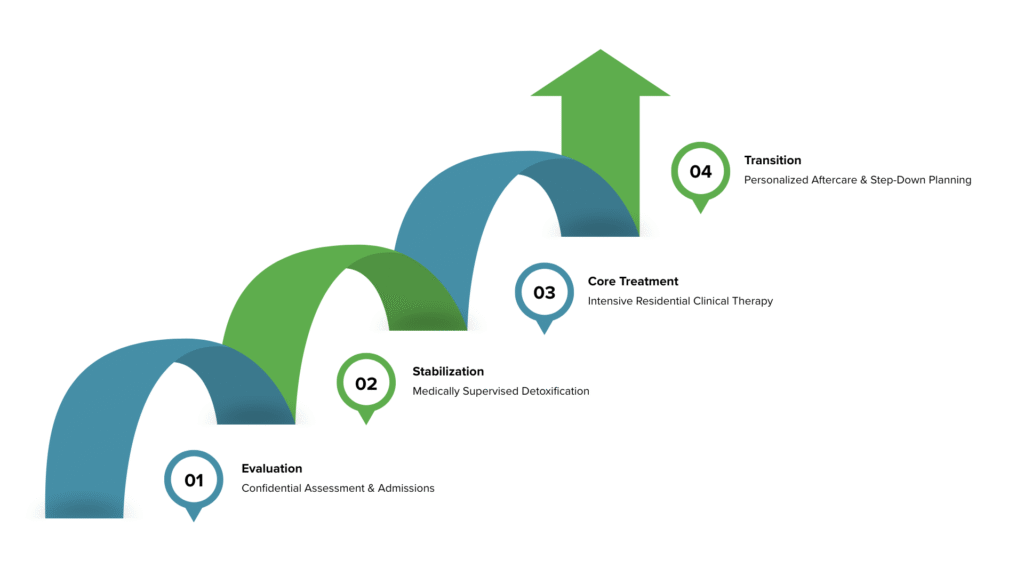
f you or someone you love is currently experiencing a severe addiction crisis, do not delay, every extra day of waiting adds unnecessary risk. Our New York clinical team is on-site around the clock and immediately arranges your admission with no waitlist.
Get answers to common questions about fentanyl addiction treatment and recovery
Most inpatient stays run 30 days, with 60 and 90-day programmes available. Length is determined by clinical assessment and insurance authorisation.
If you are physically dependent, yes. Detox manages withdrawal safely over roughly 3 to 10 days and comes first.
Most major plans do. Federal parity law requires substance use treatment to be covered comparably to other medical care.
Cost varies widely by facility, length of stay and level of medical care, and what you pay depends mostly on your insurance rather than the sticker price.
In most cases yes. The Family and Medical Leave Act protects eligible employees taking leave for substance use treatment, and the Americans with Disabilities Act provides further protection for people in recovery.
Policies vary. Access is typically most restricted during the first few days, then expands to scheduled use.
You step down rather than stop. Most people move into a partial hospitalisation or intensive outpatient
programme, then into aftercare and alumni support.
Relapse is common and does not mean treatment failed.