
Anxiety, depression, trauma, and addiction come along and make it a tougher time to tackle, so we don’t treat alone. Our professional team uses an evidence-based therapeutic approach that treats the whole person, not just a diagnosis.
Dual diagnosis treatment is an integrated therapeutic approach for those with addiction along with a mental health condition (such as depression, anxiety, PTSD, or bipolar disorder). Our rehab treats both conditions at the same time rather than just addiction.
On this page:
What it is
Why treat both together
Signs
Conditions
Admission process
Therapies
Level
A Day in Rehab
FAQs
A dual diagnosis, also known as co-occurring disorders, means having addiction with any serious mental health condition like alcohol with anxiety, or trauma with opioid addiction. Each person may face different signs, but the after-effects are the same, which makes it harder to heal.
Among adults with a substance use disorder, 45.8% also had a mental illness. It’s a condition which need serious attention; every second adult uses drugs or alcohol just to feel numb or at peace, even for a few seconds. They just want to feel normal, to quit panic attacks, or get sleep without considering their consequences. It’s the right time to get help with professional staff at NYC rehab.
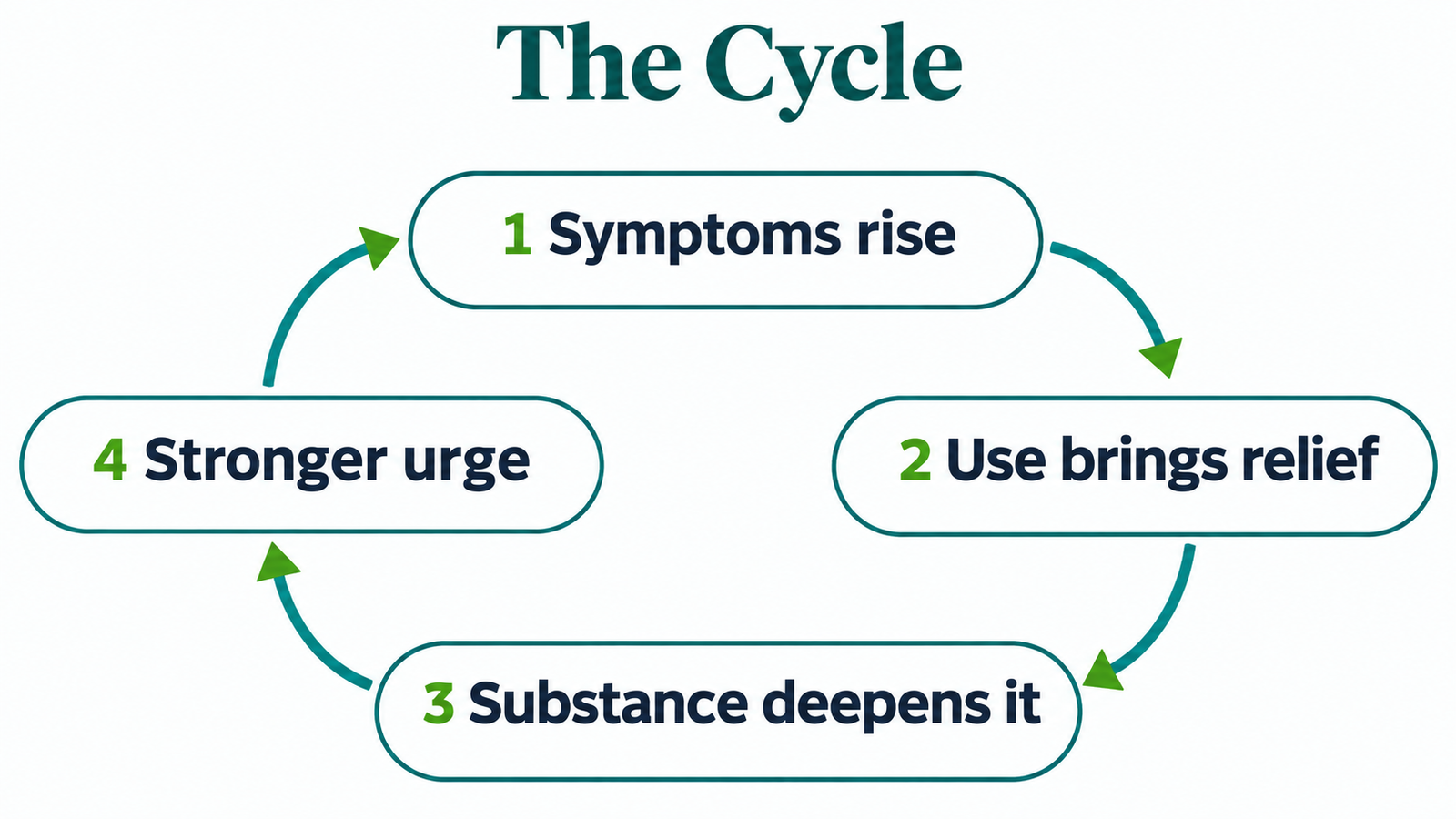
For decades, people with co-occurring disorders were sent back and forth between two systems. The rehab said, “Get your mental health stable first.” The psychiatrist said, “Come back when you’re sober.” Too many people never came back at all. In 2024, 41.2% of adults with co-occurring disorders received no treatment of any kind (SAMHSA).
If you’ve been through treatment before and it didn’t hold, this may be why. The two conditions run in a loop:

There’s no single treatment that heals dual diagnosis, but if the same behavioural pattern comes up, then seek professional help to sort out what’s happening.
Signs in yourself
If you’re thinking about suicide, call or text 988 now. You don’t need to be in treatment, sober, or sure what’s wrong to reach out. If someone is in immediate danger, call 911
Do you use alcohol or drugs to manage how you feel, not just to have a good time?
When you've cut back, did anxiety, low mood, or sleeplessness get worse?
Has treating one problem ever left the other one untouched?
If you answered yes to even one, a conversation with a clinician is worth 15 minutes of your time.
Depression and anxiety disorders are the mental health conditions that mostly come along with substance abuse. So our NYC rehab covers most co-occurring disorder, here are the most common that we treat:
Get help now or do a confidential call with our admissions team so we can listen first, then ask about substance use or any mental health history or what’s happening right now.
Here’s what actually happens, from the first phone call to the day you step down to less intensive care.
A conversation, not an interrogation.
Day 0A complete assessment.
Days 1–3Safe stabilization.
First weekOne plan, built with you.
End of week 1Treatment that works on both at once.
OngoingStep-down and continuing care.
Before dischargeThe federal Mental Health Parity and Addiction Equity Act requires most health plans to cover mental health and substance use treatment on terms comparable to medical care. For dual diagnosis, that typically includes:
No single therapy works for everyone, every person needs customized treatment which work best for their body’s condition. Here is a list of therapies we use to treat
Not Sure?
Loving someone with a dual diagnosis is exhausting. You may have been told their mood is “just the drinking”, or their drinking is “just depression”. You’ve probably tried everything you can think of. You can call us without their permission, just to understand the options.
A licensed clinician completes a full psychiatric and substance use evaluation, often repeating parts of it after withdrawal settles, because substances can mimic or mask mental health symptoms.
Integrated treatment is considered the most effective approach, as it combines evidence-based therapy or psychiatric medication management.
Integrated treatment means the same team of psychiatric, medical, and therapy providers addresses both conditions together, in one setting, with shared goals.
Yes. Most mental health medications, including antidepressants and mood stabilizers, are safe to take during addiction treatment.
Inpatient or residential care level depends on people with severe symptoms, withdrawal risk, an unsafe home, or repeated returns to use. Outpatient care, including PHP and IOP, fits people who are stable and safe at home.
Detox usually takes about a week, residential programs 30 to 90 days, and PHP or IOP several weeks to three months. Because both conditions are ongoing, most people continue outpatient therapy and medication management for months or longer after a structured program.
Stay connected without shaming, learn about both conditions, and set clear, caring boundaries.
For a long time, you may have been treated as a set of symptoms, or as a problem to manage. Here, you’re a person with a history, reasons, and a future worth building. We’ll treat your mental health and your substance use together, at a pace you can live with, with teamwork.