
An rehab aftercare program provides a peer-supportive system and an ongoing alumni community that begins after you complete detox, residential rehab, or IOP treatment. Your recovery phase doesn’t end at discharge.
Most relapses don’t occur because treatment has failed. They occur in the time following treatment’s end as the structure goes away, old environments return, and no one is making an effort to check in anymore. An addiction aftercare plan is the best way to bridge the gap. This isn’t a brochure you pick up on the final day of IOP but rather an active, constant relationship between you and your medical team, who already know the history of your condition, the triggers, as well as what has been successful for you thus far with medical detox.
The team at NYC Rehab Recovery develops the ongoing supportive plan before the end of your primary treatment, not later, which means there’s nothing to fall into from the beginning.
We’ll help you figure out honestly whether a sober house is the right next step.
Aftercare programs come with different setups, which depend on the length of counseling, environment, and level of intensity. After residential or outpatient initial treatment, this ongoing treatment will work best for you to prevent relapse and stay sober.
An effective option to let people stay in sober homes with a trigger-free environment to continue recovery after inpatient treatment.
Returning to normal life may be difficult after treatment, but alumni programs may help to maintain long-term sobriety.
During your treatment, case managers are among your most valuable supporters. A case manager’s roles include advocacy, instruction, counseling, and support.
These mutual support groups let people interact with each other to exchange their stories and learn new coping skills to overcome addiction.
Establish a drug-free community and a sense of togetherness by focusing on maintaining sobriety. Alcoholics Anonymous and SMART Recovery are examples of standard 12-step organizations.
Family education sessions on what early recovery actually looks like, month by month. Coaching on boundaries vs. enabling.
It’s never too late to put a relapse prevention plan in place.

Some signs let you know if you or your loved ones need this type of treatment or are at risk of relapse.
We’ll help you figure out honestly whether a sober house is the right next step.
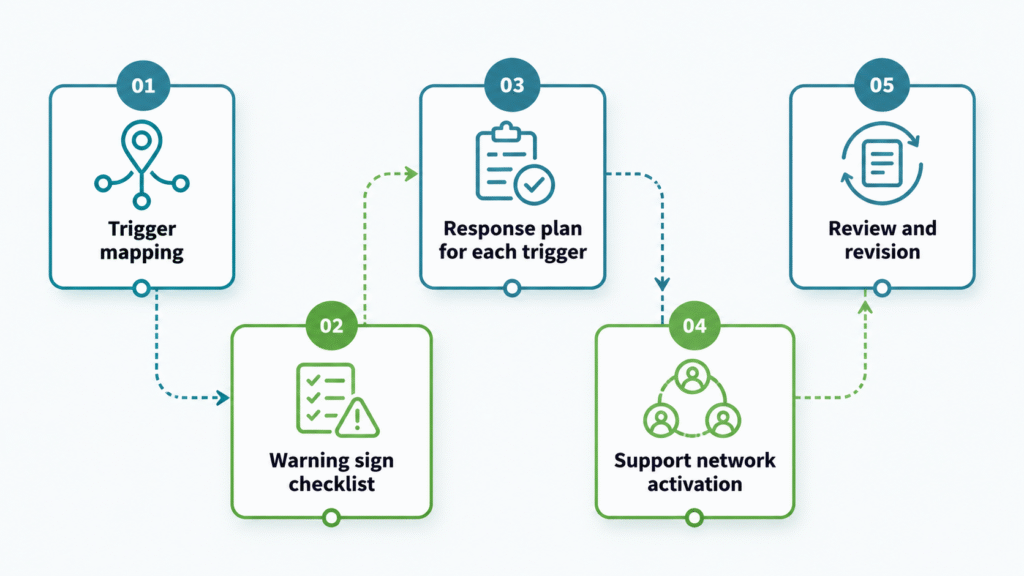
It’s never too late to put a relapse prevention plan in place.
It an ongoing long-term plan which is customized guide to make goals, coping strategies, and supportive schedules for ongoing care.
Individuals attend therapy, participate in support groups, practice coping mechanisms, and track recovery progress.
It typically lasts from several months to a year, though many people engage in support groups indefinitely.
Effective activities include attending support group meetings, exercising, practicing mindfulness, and establishing healthy routines.
You call us at the nearest rehab to get help from or make relapse prevention plan. A relapse step you back up to IOP.
Yes, with your consent. We offer family education sessions and boundary coaching so the people support you without enabling old patterns.