
| How do you stop drinking? If you or your loved ones decide to quit drinking, then first consult with a professional because abrupt quitting may cause serious withdrawal. Set a clear goal, remove triggering environments, and ask for safe withdrawal medication (MAT). |
If you’re searching for how to stop alcoholism, then you’re not out of options. As in previous years, including 2024, around 27.9 million people had alcohol use disorder. While only 8 out of 100 get proper treatment.
Most people may try to quit alcohol addiction at home on their own, which often leads to multiple relapses. Every addiction needs a customized treatment plan according to specific physical or mental health conditions. In our NYC rehab, we provide safe alcohol detox within our trigger-free rehab facility.
⚠️If you drink heavily every day, don’t stop suddenly without medical advice. Alcohol withdrawal can be dangerous. Call a doctor or us first.
How to Stop Drinking in 8 Steps That Work
There’s no single standard way to quit drinking, but those who are sincere about their decision follow these steps. With proper practical strategies and an evidence-based treatment approach, make a long-lasting healing.
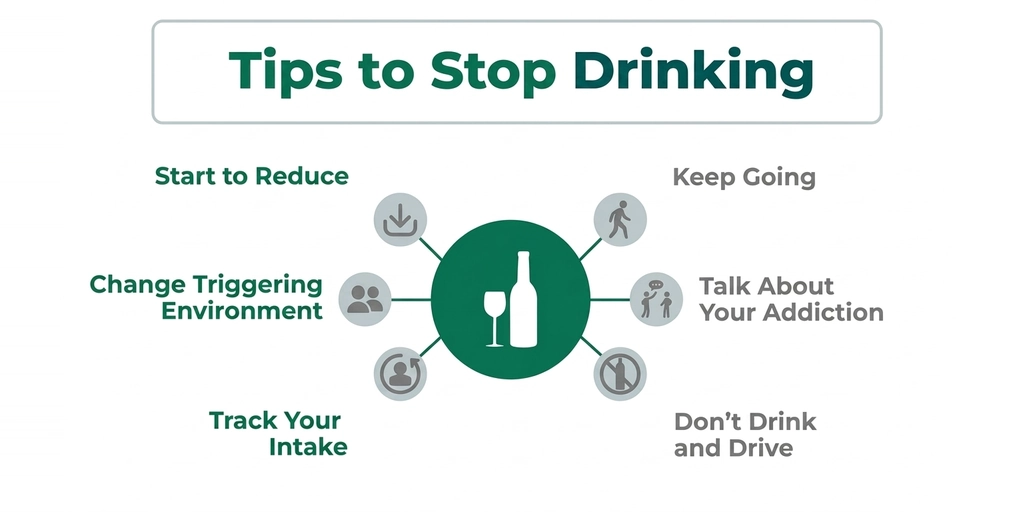
1- Remove Alcohol from the Home Environment
Your environment plays a significant role in breaking or maintaining your habits. If you actually want to cut off alcohol at home, then change your triggering environment or abusive surroundings that provoke you to take alcohol.
Just create a safe and supportive environment for recovery, which helps to stabilize your physical and mental health.
2- Implement Routine-Based Lifestyle Changes
A proper or structured daily routine will help you align with your goals instead of wasting time and energy on alcohol. When you set your sleeping cycle, healthy meal plate, and gym routine, it will stabilize your mood and reduce impulsivity.
3- Identify and Manage Triggers
Triggers are the main things that provoke you to drink or use substances. First, you need to identify every minor trigger, like any co-occurring disorder, financial issues, family problems, stress factors, or people who provoke your condition. Identifying them allows you to respond proactively rather than reactively.
In this way, you can remove these triggers and build healthy coping mechanisms such as journalling, mindfulness, or exercise.
4. Decide whether to cut back or stop completely
You need to decide whether you want to cut back or quit drinking completely. Many people in recovery may relapse again just because of “just one drink”. So stopping completely is a wise choice rather than keeping in moderation. Pick a quit date in the next week or two, write it down, and tell one person you trust.
5- Prepare for Withdrawal Symptoms
If you’ve been drinking heavily or regularly, then detoxification from alcohol or stopping suddenly may result in withdrawal symptoms. Preparing for withdrawal means understanding the symptoms to expect and knowing how to respond to them safely.
6- See a doctor before you stop
This is the most important step to save your life. If you drink heavily or continuously, then your brain will adjust to its drinking habits. Stopping suddenly can cause withdrawal symptoms within 6 to 24 hours of your last drink, such as shakes, sweating, anxiety, nausea, and racing heart.
In some people, it leads to seizures or delirium tremens (DTs), which are medical emergencies.
7- Plan for cravings before they hit
Cravings for having alcohol or drugs are strongest in the first week, and they may rise like a wave. If you find out your triggers, including any specific time, stress level, certain people, loneliness, or anger, then you can engage yourself in doing some activities so you can divert your mind. You can plan an event, call someone, go for a walk, write journals or even your thoughts, eat your favourite food, or leave the house.
8. Ask about medication
Medications help you to lower withdrawal symptoms. But don’t take these without a doctor’s consultation; there are commonly three FDA-approved medications that help you with cravings. They don’t cure the condition, but making it stable without drinking or staying sober is easier.
- Naltrexone
- Acamprosate
- Disulfiram
Signs of Alcohol: How to Know It’s Time To Stop Alcohol
Does a doctor diagnose whether you have alcohol use disorder (AUD) or not? Or suffering from mild or severe conditions? If you know these signs of alcoholism, it’s easier to treat it early without further complications.
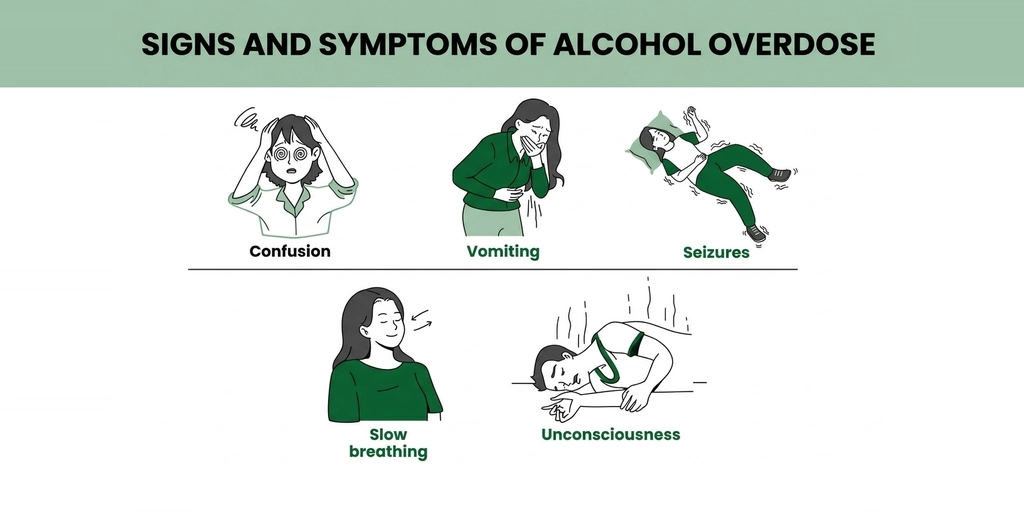
Check these signs if you have in the past year
- You often start drinking more than usual
- You even tried to cut down but failed
- You spend more time drinking than with your own family or friends
- When you try to restrain drinking, you have a strong urge to have “one last drink”
- Drinking affects your personal life, daily work routine, or even your home
- You’ve given up all your hobbies and only engage with these alcoholic kind of activities
- You start doing serious or dangerous activities while drinking, like rough driving or unsafe sex
- You keep drinking even if it makes you more anxious or causes memory blackout
- You get severe withdrawal symptoms such as shakiness, sweating, nausea, or even insomnia
- Redness or puffiness around eyes
- Yellowing of skin, or eyes might be jaundice, which needs immediate professional help
Heavy Drinking or Alcohol Use Disorder (AUD)? Mild or severe
| Box Checked | What it means | What to do |
| 0-1 | Probably not AUD | Track your drink or cut it back |
| 2-3 | Mild | Talk to a doctor or IOP |
| 4-5 | Moderate | Get professional help or IOP or OP |
| 6 or more | Severe | Get detox or admitted to inpatient treatment |
The Stages of Alcoholism
Alcoholism doesn’t develop overnight; it will take years to develop this condition. There are probably four stages based on alcohol usage and a person’s condition. Lower, mild, moderate or severe, you can get treatment at any stage of it. But the earlier you find out, the earlier you get better.
Early Stage (Coping with Drinking)
When you feel light stress or socializing with colleagues, you start taking it just for a casual hangout. It doesn’t feel bad outside, but it disturbs your body’s mechanism. Try to engage in better activities than drinking to distract yourself.
Middle Stage (Drinking starts costing you)
Drinking daily becomes a habit, and you can’t start or end your day without it. It starts affecting your work or family life, and you can’t even stop it even if you tried. You can still get back from it with minor help or good self-control.
Last Stage (Alcohol takes control over daily life)
Now taking alcohol is the main part of life. You start feeling severe withdrawal effects like sweating, shaking, or even loss of appetite when you don’t drink. Health, finance, family, friends, or personal life are badly disturbed. You can’t take the risk to cure it all alone, taking professional help is compulsory at this point.
End-Stage Alcoholism
Years of long-term drinking affect physical health so badly that it may lead to life-threatening damage. Liver diseases, heart issues, brain damage or pancreatic cancer are most common.
Hope needs to stay alive, even in this stage, you still get help from our NYC rehab and get better with the passage of time.
What Happens When You Stop Drinking Alcohol: Timeline
Here is a complete timeline so you can have an overview of what will happen when you stop drinking alcohol in detail. See more details of “What Happens When You Stop Drinking Alcohol? A Complete Timeline 2026”
| When | What you may feel | What’s happening in your body |
| 6–24 hours | Anxiety, shaky hands, sweating, nausea, headache, trouble sleeping | Your over-stimulated nervous system has nothing to slow it down |
| Day 1 to day 3 no alcohol | Symptoms usually peak | Peak withdrawal |
| Day 4 to day 6 no alcohol | Physical symptoms ease | The nervous system is rebalancing |
| Day 7 and day 8 no alcohol | More energy, clearer head, less puffiness | Acute withdrawal |
| Day 11 and the second week | Better sleep and focus | The brain is adjusting to life without alcohol |
| 3 weeks no alcohol | Steadier sleep and mood, more energy | Liver fat can start to fall, and blood pressure often begins to improve |
| 1–3 months and beyond | Feeling more like yourself; cravings become less frequent | Fatty liver can often reverse |
Should You Quit Cold Turkey or Taper Off Alcohol?
It depends on how much your body or brain depends on it. If you’re drinking once or twice a week, then it’s normal to quit it but if you are drinking heavily, then it causes dangerous withdrawal symptoms.
The safest option is medically supervised Detox with professionally trained physicians. It’s not a sign of weakness but a courageous point.
How to Taper Off Alcohol Safely?
The secure way to taper off alcohol if you’re physically dependent on it is to seek “Professional help or medical detox”. In medical detox, tapering off does not happen all at once, instead, medical staff give medication to lower withdrawal symptoms and then reduce the dose step by step while monitoring your vitals.
You need to track your drinking habits and then do relaxing activities.
How long is Alcohol Detox?
Alcohol detox can take almost 3 to 7 days or maybe 10 days for severe dependency. Detox is the step toward cleaning your body of all toxins, but it doesn’t cure the underlying root cause of drinking. Which eventually turns into relapse.
How to Stop Alcohol Cravings
Craving is normal during the first month of restraining, it may rise within 15-20 minutes but then it calms down if you don’t feed it while drinking. You need to plan how you can control your cravings
- Delay 20 min
- Pass the urge
- Check the HALT (hungry, angry, lonely, or tired?)
- Change your location
- Call or text someone
- Replacement drink should be ready
- Make alcohol difficult to reach for yourself
- Go for a walk or write your thoughts
What kills the urges to drink?
Nothing cures the urges to stabilise instantly, but the FDA-approved medical and behavioural therapies work best together.
What foods help to reduce alcohol cravings?
Feeling an empty stomach or low glucose level may cause more cravings. So eat well-balanced food frequently with protein-rich meals. Don’t skip meals, instead, eat more. Must have a healthy snack within your reach all day.
Does naltrexone help with alcohol withdrawal?
No, it doesn’t cure drinking withdrawal symptoms, but it will reduce cravings or urges to drink.
Treatment of Alcoholism in our NYC Rehab Recovery
Alcohol use disorder is treatable and manageable with the right professional help. How much you drink, your mental health state or your withdrawal risk determine your customized treatment. In our NYC rehab recovery, we provide proper assessment, then confidential sessions, then therapies and ongoing support.
You don’t have to do all Alone, We’re Here to Provide Support
How much does alcohol rehab cost?
The cost depends on the level of care and how long you stay in the rehabilitation center. Medical detox and inpatient treatment cost more than other treatment levels.
What is the 1/2/3 rule for drinking?
The 1/2/3 rule is an informal moderation guideline, in which no more than one standard drink is consumed per hour, or no more than two per any specific event.
How long is alcohol detox?
Alcohol detox usually takes 3 to 7 days, and up to 10 days for people with severe dependence.
Can you flush alcohol out of your system faster?
No. Your liver clears alcohol at a fixed ratio, one standard drink metabolizes per hour, and nothing can speed it up.
How long does alcoholic neuropathy take to go away?
Alcoholic neuropathy (numbness, tingling, or burning in the hands and feet) normally heals within weeks to months of no drinking with good nutrients and Vitamin B12 supplementation.
Are there natural remedies for quitting alcohol?
Professional help is compulsory, but you can make it way easier with proper exercise, regular sleep, whole nutrition, and support from surrounding people’s.